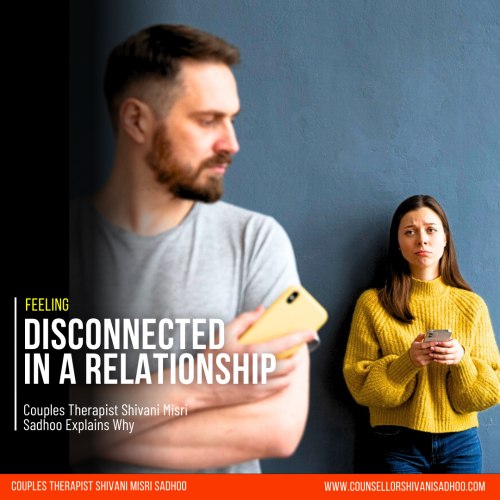
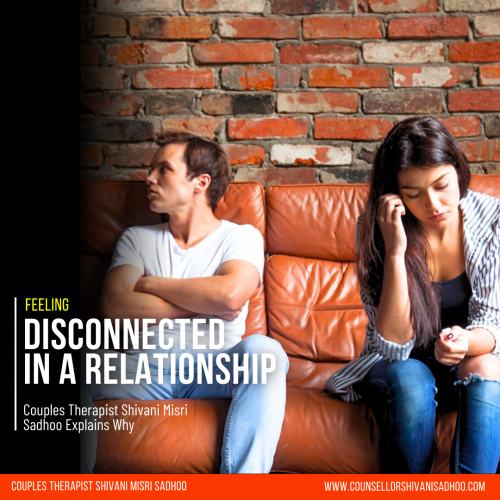
At some point, many couples find themselves asking a quiet but painful question: “Why do I feel so distant from the person I love?” You may still care deeply for your partner, share a home, or manage daily responsibilities together—yet emotionally, something feels missing. This sense of emotional distance can be confusing and distressing, especially when there’s no obvious conflict.
From a therapist’s perspective, feeling disconnected in a relationship is more common than people realise, and it doesn’t always mean the relationship is failing. Often, it’s a signal that something important needs attention, says Shivani Misri Sadhoo, who is one of the leading couples therapists in Delhi.
What Is the Feeling of Disconnection in a Relationship?
Emotional disconnection refers to a lack of closeness, intimacy, or emotional responsiveness between partners. It’s the feeling of being “alone together.” Conversations become functional rather than meaningful, affection decreases, and emotional sharing feels unsafe, awkward, or unnecessary.
Disconnection doesn’t usually happen overnight. It develops gradually through unmet emotional needs, unresolved conflicts, or changing life circumstances. Many couples stay physically present while emotionally drifting apart, hoping the feeling will pass on its own.
Common Signs of Emotional Disconnection
As a therapist, it is often noticed that certain patterns occur when couples describe feeling disconnected:
- Conversations feel shallow, routine, or purely practical
- Reduced physical affection or intimacy
- Feeling unheard, misunderstood, or emotionally unsupported
- Avoiding meaningful discussions to prevent conflict
- Spending more emotional energy on work, phones, or others than on the relationship
- A sense of loneliness despite being in a partnership
Recognising these signs early can prevent deeper emotional distance from taking root.
Why Do Couples Feel Disconnected?
There are several reasons for feeling disconnected, some of them are;
Poor or Ineffective Communication
Many couples talk daily but don’t truly communicate. When feelings, needs, and vulnerabilities aren’t expressed—or aren’t received with empathy—partners slowly stop opening up. Over time, emotional walls replace emotional safety.
Unresolved Conflicts
Arguments that are avoided, dismissed, or repeatedly revisited without resolution create emotional fatigue. Suppressed resentment doesn’t disappear; it shows up as withdrawal, irritability, or indifference.
Stress and Life Transitions
Career pressure, financial worries, parenting responsibilities, health issues, or major life changes can drain emotional energy. When survival mode takes over, emotional connection often becomes a lower priority.
Emotional Neglect (Often Unintentional)
Disconnection doesn’t always involve obvious harm. Sometimes it’s about what’s missing—validation, appreciation, affection, or curiosity about each other’s inner world.
Individual Emotional Struggles
Anxiety, depression, burnout, or unresolved personal trauma can limit a person’s emotional availability. Partners may misinterpret this as a lack of love rather than emotional overwhelm.
Mismatched Expectations
Over time, people evolve. When partners don’t revisit expectations around intimacy, communication, or support, they may unknowingly grow in different emotional directions.
The Emotional Impact of Disconnection
Feeling disconnected can lead to self-doubt (“Am I not enough?”), frustration, or emotional numbness. Some people begin to emotionally withdraw for self-protection, while others may seek validation elsewhere—through work, social media, or external relationships.
Left unaddressed, emotional disconnection can deepen into chronic dissatisfaction, frequent conflict, or emotional disengagement that is harder to reverse.

Can Emotional Disconnection Be Repaired?
From a therapist’s viewpoint, disconnection is not a dead end—it’s a message. It signals the need for reconnection, awareness, and intentional effort.
Acknowledge the Distance – Ignoring the issue often increases it. Naming the disconnection calmly and honestly is the first step toward healing.
Shift from Blame to Curiosity – Instead of asking, “Why are you like this?” try “What happened between us?” Curiosity creates safety; blame shuts it down.
Rebuild Emotional Safety – Small, consistent actions—active listening, empathy, appreciation—restore trust and openness over time.
Prioritise Quality Connection – Even short, intentional moments of undivided attention can rebuild emotional closeness when practised regularly.
Seek Professional Support – A therapist can provide a neutral, safe space to uncover hidden emotional patterns, unmet needs, and communication blocks that couples struggle to navigate alone.
When to Consider Therapy?
If emotional distance feels persistent, confusing, or painful despite your efforts, therapy can help. It’s not about assigning fault—it’s about understanding the emotional dynamics that shaped the disconnection and learning how to reconnect in healthier ways.
Feeling disconnected in a relationship doesn’t mean love is gone. Often, it means love has been buried under stress, silence, or unspoken needs. With awareness, effort, and the right guidance, emotional closeness can be rebuilt—sometimes stronger and more meaningful than before. Disconnection is not a failure; it’s an invitation to reconnect more consciously and deeply.

Shivani Misri Sadhoo is an internationally recommended relationship counsellor by the world’s biggest and most trusted study and research-based foundation for couples therapy – Gottman Institute. She is trained in specialised key relationship counselling Skills from AIIMS, VIMHANS and various other reputed institutions. Counsellor Shivani Misri Sadhoo is also certified in emotionally focused therapy, cognitive behavioural therapy, and dialectical behaviour therapy.
Counselor Shivani Misri Sadhoo is also a Certified Neuro Linguistic Practitioner with specialized training and experience in the field of affairs/betrayals, trust issues, difficulty communicating, conflicting values, bereavement, grief and loss (affairs, separation, divorce, childhood) and emotional health issue (anxiety, social anxiety, fear, depression, low mood).
Currently, Shivani Misri Sadhoo is one of the top counselors with the HIGHEST Success Rate with over 17,000 happy couples and individuals (based in India and abroad), who has benefited from her therapy. Psychologist and Counselor Shivani Misri Sadhoo not only practices independently from her clinic in Greater Kailash, Delhi, India, but also is listed on the panel of eminent hospitals like IBS Hospital Panel – Institute of Brain and Spine, Express Clinic, Fortis (formerly) based in Delhi.
Call Counselor: +91-8860875040
Email: saarthiforlife@gmail.com