Summary
- One partner can begin positive relationship change through counselling.
- Better communication and emotional awareness often reduce conflict.
- Individual counselling provides clarity, support, and healthier coping strategies.
Every marriage goes through difficult phases. Misunderstandings, communication breakdowns, unresolved conflicts, or emotional distance can leave one partner eager to seek professional help while the other remains hesitant or refuses altogether.
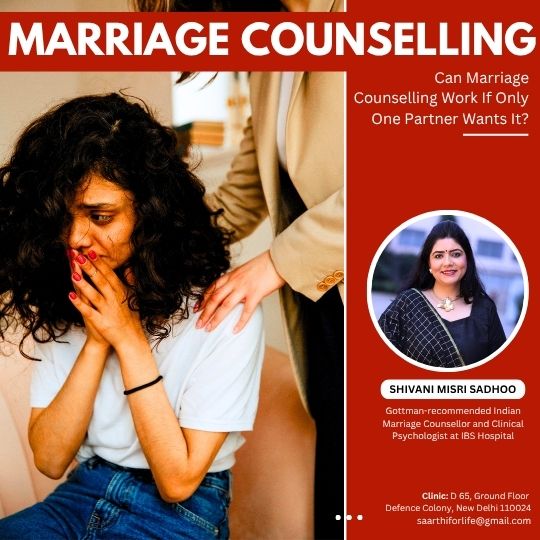
This often raises an important question: Can marriage counselling still make a difference if only one spouse is willing to participate?
According to Shivani Misri Sadhoo, who is an experienced couple counsellor in Delhi, the answer is often yes. While couples therapy ideally involves both partners, meaningful change can begin with just one person.
Individual efforts can improve communication, emotional responses, and relationship dynamics, sometimes encouraging the other partner to become involved later.
Can Marriage Counselling Still Help When Only One Partner Participates?
Marriage counselling is not solely about resolving conflicts together; it is also about helping individuals better understand themselves and their relationships.
When one partner attends counselling alone, they learn healthier ways to communicate, manage emotions, and respond to challenges. These positive changes can gradually influence the relationship as a whole.
Although counselling cannot force someone else to change, it can equip the willing partner with practical tools to reduce conflict, improve understanding, and make more thoughtful decisions about the future of the relationship.
Gottman Certified. Level 3, Couples Therapist in Delhi Shivani Misri Sadhoo says that “A stronger marriage doesn’t always begin with two people changing—it often begins with one person choosing to grow.”
Understanding the Root of Relationship Problems
Many relationship conflicts are symptoms of deeper issues rather than the actual problem. Counselling helps identify patterns such as poor communication, unmet emotional needs, unrealistic expectations, or unresolved past experiences that may be affecting the marriage.
Recognising these underlying causes allows one partner to respond differently instead of repeating the same unhealthy cycle.
Improving Communication Skills
Communication problems are among the most common reasons couples seek therapy. Through counselling, an individual learns how to express thoughts and emotions calmly, listen without becoming defensive, and handle disagreements more constructively.
When communication improves on one side, conversations often become less confrontational, creating opportunities for healthier interactions.
Managing Emotional Reactions
Arguments frequently escalate because of emotional reactions rather than the issue itself. Marriage counselling helps individuals recognise emotional triggers, regulate their responses, and approach difficult situations with greater patience and empathy.
These changes can reduce tension and make everyday interactions more positive.
Leading Positive Change
Healthy relationship changes often begin with one person. By becoming more emotionally aware, improving communication, and handling conflicts differently, one partner can influence the overall dynamic of the marriage.
While there is no guarantee that the other spouse will change, positive behaviour frequently encourages a more cooperative response over time.
Encouraging the Other Partner to Participate
Many reluctant spouses become more open to counselling after noticing positive changes in their partner. As arguments decrease and communication improves, they may begin to see counselling as a supportive resource rather than a criticism of their behaviour.
Counsellors also provide guidance on how to invite a reluctant partner into therapy without creating pressure or blame.
Gaining Clarity About the Relationship
Sometimes counselling is not only about saving a marriage but also about understanding it more clearly. Individual sessions help people reflect on their needs, expectations, boundaries, and long-term goals.
This clarity enables them to make thoughtful decisions based on understanding rather than anger or frustration.
Knowing When Individual Counselling Is Especially Helpful
Seeking counselling alone may be particularly beneficial when a partner refuses therapy, communication has completely broken down, repeated arguments remain unresolved, or an individual feels emotionally overwhelmed.
Even without the other spouse’s participation, therapy offers emotional support, practical coping strategies, and guidance during challenging periods.
Marriage counselling is most effective when both partners are willing to participate, but that does not mean it cannot help when only one person takes the first step. Individual counselling can improve communication, emotional resilience, and relationship awareness while creating opportunities for healthier interactions.
In many cases, one person’s willingness to grow becomes the catalyst for positive change within the marriage. Whether the goal is rebuilding the relationship or gaining clarity about the future, seeking professional support is always a constructive step forward.

Shivani Misri Sadhoo is an internationally recommended relationship counsellor by the world’s biggest and most trusted study and research-based foundation for couples therapy – Gottman Institute. She is trained in specialised key relationship counselling Skills from AIIMS, VIMHANS and various other reputed institutions. Counsellor Shivani Misri Sadhoo is also certified in emotionally focused therapy, cognitive behavioural therapy, and dialectical behaviour therapy.
Counselor Shivani Misri Sadhoo is also a Certified Neuro Linguistic Practitioner with specialized training and experience in the field of affairs/betrayals, trust issues, difficulty communicating, conflicting values, bereavement, grief and loss (affairs, separation, divorce, childhood) and emotional health issue (anxiety, social anxiety, fear, depression, low mood).
Currently, Shivani Misri Sadhoo is one of the top counselors with the HIGHEST Success Rate with over 17,000 happy couples and individuals (based in India and abroad), who has benefited from her therapy. Psychologist and Counselor Shivani Misri Sadhoo not only practices independently from her clinic in Greater Kailash, Delhi, India, but also is listed on the panel of eminent hospitals like IBS Hospital Panel – Institute of Brain and Spine, Express Clinic, Fortis (formerly) based in Delhi.
Call Counselor: +91-8860875040
Email: saarthiforlife@gmail.com