Direct Answer Summary
- Modern marriages are evolving as expectations around commitment, equality, and independence change.
- Emotional connection and communication are becoming as important as traditional relationship roles.
- Couples need flexibility, mutual respect, and realistic expectations to navigate changing marital dynamics.

Marriage has never been entirely separate from the society in which it exists. Economic pressures, changing gender roles, career ambitions, technology, and evolving ideas about personal freedom are reshaping how people approach long-term relationships. For some couples, marriage remains a lifelong commitment built around familiar traditions. For others, it requires a different understanding of partnership, emotional support, and shared responsibility.
These changes raise an important question: are people preparing for the realities of modern marriage, or are they entering relationships with expectations that no longer match how married life works today? Let us see what Shivani Misri Sadhoo a highly acclaimed marriage counsellor in Delhi, has to say in this blog.
What Is Changing About Marriage Today?
One of the biggest changes is the growing expectation that marriage should offer both stability and personal fulfilment. Partners increasingly want emotional intimacy, companionship, respect, and opportunities to pursue individual goals. Traditional expectations may still influence relationships, but couples are also negotiating what commitment means to them personally.
This shift can create opportunities for healthier partnerships. It can also lead to conflict when two people have different ideas about household responsibilities, career priorities, finances, parenting, or emotional availability.
“A lasting marriage is not built on expectations alone, but on the willingness of two people to understand, adapt, and grow together.” Opines Gottman Certified Couples Therapist Shivani Misri Sadhoo.
From Traditional Roles to Shared Responsibility
In many marriages, responsibilities were once divided according to established gender roles. Today, more couples are questioning whether these arrangements work for their circumstances.
Both partners may contribute financially, manage household tasks, care for children, and support each other’s professional ambitions. However, changing expectations do not automatically lead to equal participation. One partner may still carry a disproportionate share of domestic or emotional labour.
A sustainable marriage requires honest conversations about responsibilities rather than assumptions based on tradition. Fairness does not necessarily mean dividing every task equally; it means ensuring that both partners feel respected and that the arrangement works for them.
Emotional Intimacy Is No Longer an Afterthought
Financial stability and family responsibilities remain important, but many couples also expect marriage to provide emotional security. They want to feel heard, understood, valued, and supported during difficult periods.
When emotional needs remain unspoken, partners may feel lonely even while living together. Everyday disagreements can become more intense when one person feels dismissed or misunderstood.
Developing emotional intimacy involves listening without immediately becoming defensive, expressing needs clearly, and making time for meaningful conversations. Small, consistent acts of consideration can strengthen a relationship more effectively than occasional grand gestures.
Career, Independence, and Personal Space
Modern couples often balance demanding careers, individual interests, friendships, and family obligations alongside their relationship. Greater independence can support personal growth, but it may also create tension when partners struggle to coordinate their priorities.
Problems can arise when one person’s ambitions are repeatedly prioritised over the other’s or when time together becomes limited to managing practical responsibilities.
Healthy marriages allow room for individuality without neglecting the partnership. Discussing career decisions, personal boundaries, financial goals, and shared time can help couples make choices that consider both partners.
Technology Is Changing Relationship Expectations
Digital communication has made it easier for couples to stay connected, but it has also introduced new sources of disagreement. Social media activity, online friendships, privacy, and expectations around immediate replies can become points of conflict.
Comparing a marriage with carefully curated images of other couples may also create unrealistic expectations. What appears effortless online may conceal ordinary disagreements and personal struggles.
Couples benefit from discussing what digital boundaries mean to them. Rather than assuming that both partners share the same views on privacy or online behaviour, they can establish mutually agreed expectations that protect trust and respect.
How These Changes Are Affecting Indian Marriages?
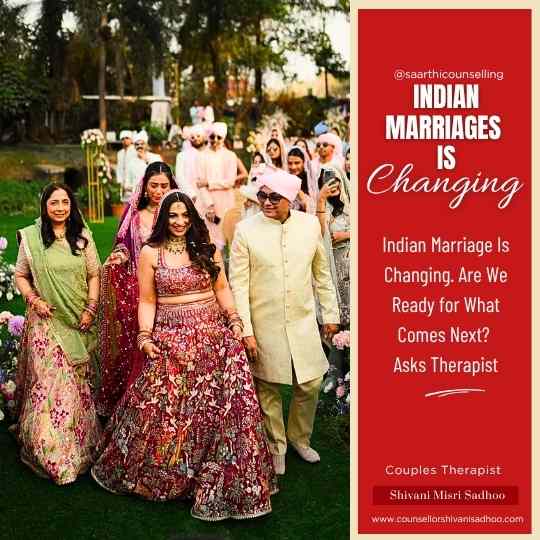
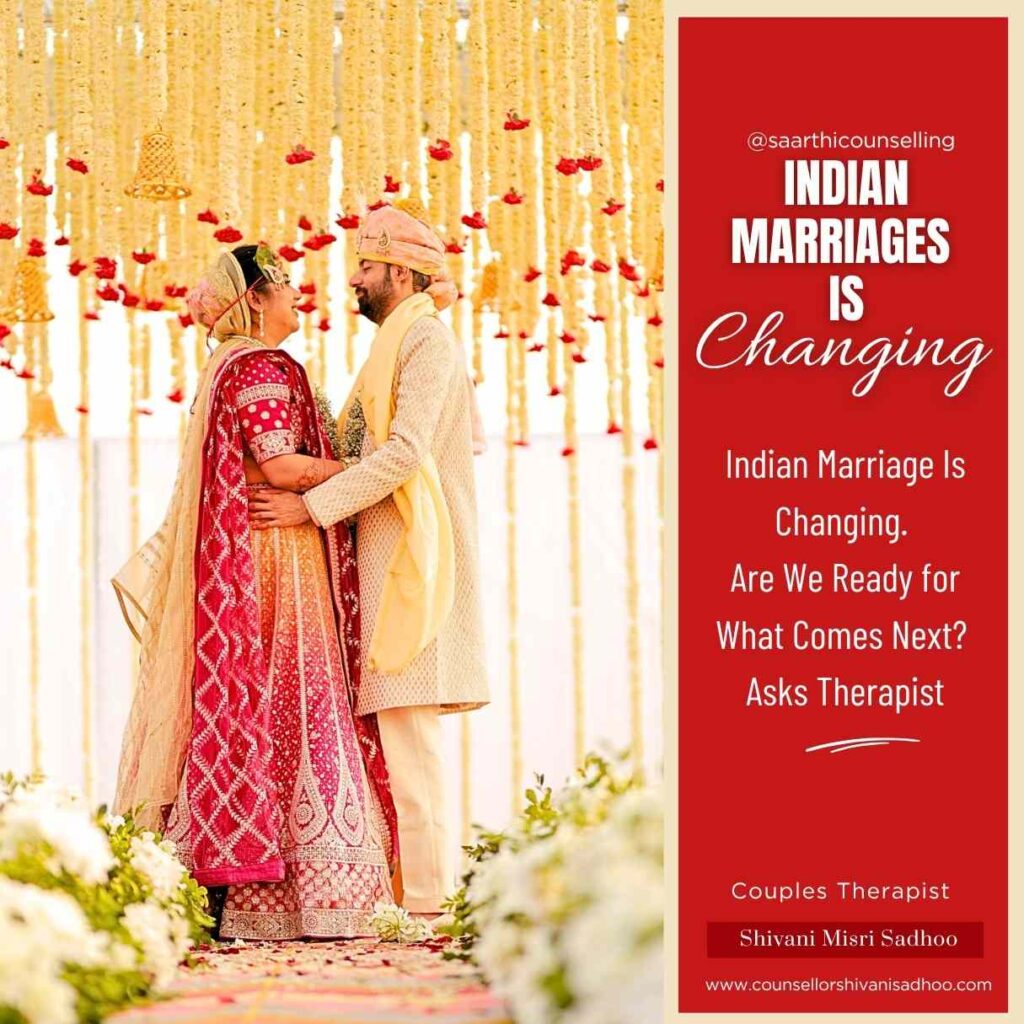
In India, marriage continues to be shaped by family traditions, cultural expectations, and social responsibilities. However, changing attitudes towards gender equality, financial independence, and individual choice are influencing how couples approach married life. Many partners are balancing family expectations with career ambitions, personal boundaries, and the desire for emotional compatibility. Differences between generations can add another layer of complexity, particularly when couples and their families hold different views about marital roles. Navigating these changes requires open communication, mutual respect, and the ability to establish boundaries while maintaining meaningful family relationships.
Are Couples Prepared for the Challenges Ahead?
Understanding that marriage is changing is only the first step. Couples also need practical skills to manage disagreements, communicate needs, and adapt when circumstances change.
Premarital conversations about children, money, careers, family involvement, and household responsibilities can help identify differences before they become recurring conflicts. Married couples can revisit these topics as their lives evolve.
Seeking support from a qualified relationship therapist can also help partners recognise unhelpful patterns and improve communication. Therapy is not only for relationships in crisis; it can also provide a space to address concerns before resentment becomes deeply established.
As a therapist might emphasise, the goal is not to create a perfect marriage but to build a relationship in which both partners can grow while remaining connected.
Marriage is changing because people’s lives, priorities, and expectations are changing. Traditional values and modern aspirations do not have to compete, provided couples are willing to discuss what matters to them and build shared expectations.
The future of marriage may depend less on following a single model and more on developing the communication, flexibility, and mutual respect needed to sustain a partnership. Being ready for that future begins with understanding not only what we expect from marriage, but also what we are prepared to contribute to it.

Shivani Misri Sadhoo is an internationally recommended relationship counsellor by the world’s biggest and most trusted study and research-based foundation for couples therapy – Gottman Institute. She is trained in specialised key relationship counselling Skills from AIIMS, VIMHANS and various other reputed institutions. Counsellor Shivani Misri Sadhoo is also certified in emotionally focused therapy, cognitive behavioural therapy, and dialectical behaviour therapy.
Counselor Shivani Misri Sadhoo is also a Certified Neuro Linguistic Practitioner with specialized training and experience in the field of affairs/betrayals, trust issues, difficulty communicating, conflicting values, bereavement, grief and loss (affairs, separation, divorce, childhood) and emotional health issue (anxiety, social anxiety, fear, depression, low mood).
Currently, Shivani Misri Sadhoo is one of the top counselors with the HIGHEST Success Rate with over 17,000 happy couples and individuals (based in India and abroad), who has benefited from her therapy. Psychologist and Counselor Shivani Misri Sadhoo not only practices independently from her clinic in Greater Kailash, Delhi, India, but also is listed on the panel of eminent hospitals like IBS Hospital Panel – Institute of Brain and Spine, Express Clinic, Fortis (formerly) based in Delhi.
Call Counselor: +91-8860875040
Email: saarthiforlife@gmail.com