Direct Answer Summary
- Couples may struggle when children leave home because their shared parenting role changes.
- Reduced daily responsibilities can expose unresolved conflicts, emotional distance, or differences in expectations.
- Open communication, shared goals, and couples counselling can help partners reconnect during this transition.
For many parents, watching their children leave home to pursue education, careers, or independent lives is a proud milestone. Yet, once the daily responsibilities of raising children are reduced, some couples discover that their own relationship needs attention.
This transition is often called the empty-nest phase. While some couples enjoy greater freedom and renewed closeness, others experience loneliness, disagreements, or emotional distance. The change does not necessarily mean a marriage is failing; it may reveal relationship issues that were previously overshadowed by parenting responsibilities, shares Shivani Misri Sadhoo who is an experienced couples therapist in Delhi.
Why Do Some Marriages Struggle After Children Leave Home?
Here are some of the reasons why some marriages struggle post their children leave home:
The Parenting Role No Longer Defines Everyday Life
For years, a couple’s routine may revolve around school schedules, meals, family activities, and their children’s needs. When children leave, parents may struggle to adjust to a quieter home and a different daily routine.
Partners who once worked closely together as parents may discover that they have not invested the same attention in their relationship. Rebuilding a sense of connection requires recognizing that their roles as spouses deserve attention beyond their responsibilities as parents.
Unresolved Relationship Problems Become More Visible
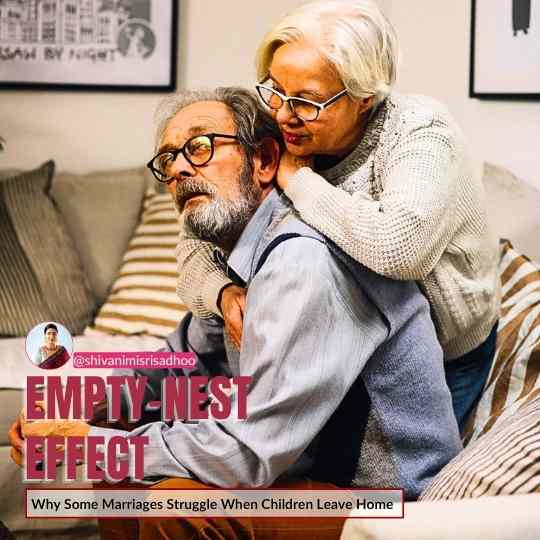
Parenting responsibilities can leave little time to address disagreements about intimacy, finances, household responsibilities, or personal expectations. When children move out, these issues may become harder to ignore.
Couples may find themselves arguing more frequently or feeling uncomfortable spending extended time together. Research on empty-nest couples has identified communication, household chores, and everyday habits among common sources of marital disagreement.
Partners May Have Different Expectations for the Next Chapter
One partner may look forward to traveling, socializing, and exploring new interests, while the other may feel lonely or uncertain about the future. Differences can also arise over retirement, financial priorities, caring for aging parents, or how frequently children should visit.
Neither partner’s response is automatically wrong. However, when expectations remain unspoken, disappointment and resentment can develop.

Emotional Intimacy May Need to Be Rebuilt
Some couples gradually become efficient co-parents but lose touch with each other as romantic partners. Their conversations may focus mainly on children, responsibilities, and practical decisions rather than affection, personal interests, or emotional needs.
When the children leave, this distance may become more noticeable. Rebuilding intimacy often begins with small, consistent efforts to listen, spend time together, and show curiosity about each other’s lives.
What Changes Can Couples Experience During the Empty-Nest Phase?
The experience is not the same for every couple. Some feel distressed, while others become closer as parenting demands decrease. Research involving married couples has found that empty-nest status can be associated with greater marital closeness, although individual experiences vary.
| Relationship area | Possible challenge | Helpful response |
| Daily routine | Feeling lost without parenting responsibilities | Develop new individual and shared routines. |
| Communication | More arguments or emotional withdrawal | Discuss concerns calmly and directly. |
| Intimacy | Feeling disconnected as partners | Make time for affection and meaningful conversations. |
| Future plans | Different expectations about retirement, travel, or family | Agree on realistic shared goals. |
| Family boundaries | Disagreements about children’s independence or visits | Respect adult children’s autonomy while maintaining connection. |
How Can Couples Reconnect After Their Children Leave Home?
Couples can begin by treating this stage as a shared adjustment rather than a problem caused by one partner. Honest conversations about hopes, fears, and expectations can help both individuals understand what the transition means to them.
Creating new experiences together, revisiting shared interests, and maintaining friendships outside the marriage can also support emotional well-being. At the same time, each partner should have room to pursue personal interests and develop an identity beyond parenting.
If recurring conflicts, resentment, loneliness, or emotional disconnection persist, couples counselling can provide a structured space to explore these concerns. A marriage counsellor can help partners identify unhelpful communication patterns, understand each other’s needs, and develop healthier ways to manage change.
When Should Couples Consider Marriage Counselling?
Professional support may be helpful when conversations repeatedly turn into arguments, partners avoid meaningful discussions, intimacy declines significantly, or one or both individuals feel emotionally isolated.
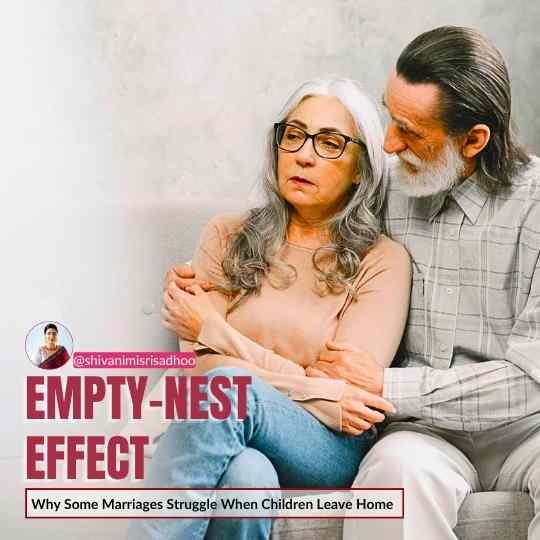
Counselling does not have to be a last resort. Seeking support during a major life transition can help couples address concerns before they become deeply entrenched. The aim is not to recreate the marriage as it was during the parenting years, but to build a relationship that works for both partners in their changing circumstances.
“An empty nest does not have to mean an empty marriage; it can be the beginning of a new connection.” Says couples counselor Shivani Misri Sadhoo.
The empty-nest phase can bring both challenges and opportunities. When children leave home, couples may need to rediscover their shared identity, revisit expectations, and address issues that were previously overlooked. With open communication, mutual understanding, and professional support when needed, this transition can become an opportunity to strengthen the marriage.
5 Essential FAQs on Empty Nest Effects
Why do some marriages struggle when children leave home during the empty-nest phase?
Some marriages struggle when children leave home because the shared parenting role no longer structures everyday life, exposing emotional distance and previously overlooked relationship issues.When daily schedules around school, meals, and family activities end, couples face a quieter home where disagreements over intimacy, finances, household chores, and future expectations become harder to ignore. Additionally, partners who functioned primarily as efficient co-parents may realize they need to rebuild their romantic connection.
Does feeling distant or arguing during the empty-nest phase mean a marriage is failing?
No, experiencing loneliness, disagreements, or emotional distance during the empty-nest phase does not mean a marriage is failing.As couples therapist Shivani Misri Sadhoo explains, this transition simply reveals relationship areas that were overshadowed by years of active parenting. In fact, research on married couples indicates that empty-nest status can ultimately foster greater marital closeness when partners use the transition to reconnect.
What are the most common relationship changes and challenges couples experience after children move out?
During the empty-nest phase, couples most commonly experience changes across five core relationship areas: daily routines, communication, emotional intimacy, future plans, and family boundaries.Specific challenges include feeling lost without daily parenting tasks, arguing over household chores and everyday habits, feeling disconnected as romantic partners, and holding mismatched expectations around travel, retirement, finances, aging parents, or how often adult children should visit.
How can couples reconnect and rebuild emotional intimacy after their children leave home?
Couples can reconnect after children leave home by treating the transition as a shared adjustment, having honest conversations about hopes and fears, and making small, consistent investments in emotional intimacy.Practical steps include developing new shared and individual daily routines, showing genuine curiosity about each other’s inner lives, agreeing on realistic future goals, and respecting adult children’s autonomy while maintaining outside friendships and personal hobbies.
When should empty-nest couples consider professional marriage counselling?
Couples should consider marriage counselling when conversations repeatedly turn into arguments, partners avoid meaningful discussions, intimacy declines significantly, or either spouse feels emotionally isolated.Counselling does not need to be a last resort. Seeking structured professional guidance during a major life transition helps partners identify unhelpful communication patterns, address resentment before it becomes entrenched, and build a relationship suited to their changing circumstances.

Shivani Misri Sadhoo is an internationally recommended relationship counsellor by the world’s biggest and most trusted study and research-based foundation for couples therapy – Gottman Institute. She is trained in specialised key relationship counselling Skills from AIIMS, VIMHANS and various other reputed institutions. Counsellor Shivani Misri Sadhoo is also certified in emotionally focused therapy, cognitive behavioural therapy, and dialectical behaviour therapy.
Counselor Shivani Misri Sadhoo is also a Certified Neuro Linguistic Practitioner with specialized training and experience in the field of affairs/betrayals, trust issues, difficulty communicating, conflicting values, bereavement, grief and loss (affairs, separation, divorce, childhood) and emotional health issue (anxiety, social anxiety, fear, depression, low mood).
Currently, Shivani Misri Sadhoo is one of the top counselors with the HIGHEST Success Rate with over 17,000 happy couples and individuals (based in India and abroad), who has benefited from her therapy. Psychologist and Counselor Shivani Misri Sadhoo not only practices independently from her clinic in Greater Kailash, Delhi, India, but also is listed on the panel of eminent hospitals like IBS Hospital Panel – Institute of Brain and Spine, Express Clinic, Fortis (formerly) based in Delhi.
Call Counselor: +91-8860875040
Email: saarthiforlife@gmail.com