
Summary
- A wedding requires event planning, while married life requires ongoing relationship preparation.
- Open conversations about communication, finances, family, responsibilities and expectations can help couples understand each other better.
- Preparing for marriage is less about creating a perfect relationship and more about developing the skills to navigate life together.

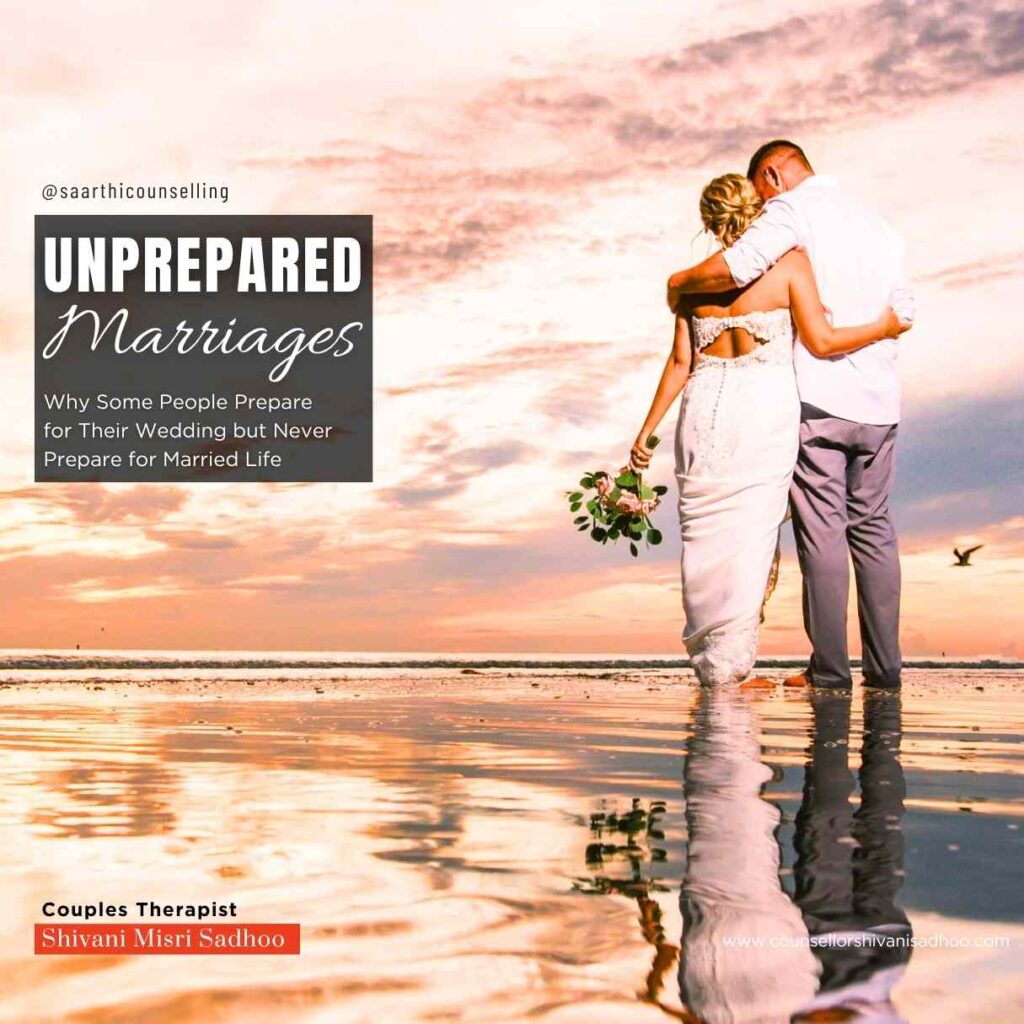
A wedding can take months of planning. Couples choose the venue, outfits, invitations, food, photography and every detail of the celebration. But once the ceremony is over, the real journey begins.
Marriage involves much more than a beautiful wedding day. It brings shared responsibilities, changing priorities, financial decisions, family expectations, communication challenges and the need to grow together. Yet many couples spend considerable time preparing for the event and very little time preparing for the relationship that follows, says Shivani Misri Sadhoo, who is one of most experienced marriage counsellors in Delhi.
Why Is Preparing for Marriage Different from Planning a Wedding?
A wedding is an event with a clear date and checklist. Married life is an ongoing partnership that requires communication, flexibility and mutual understanding.
Planning the wedding may focus on how everything looks and feels on one particular day. Preparing for marriage means discussing how two people will handle everyday life together, including disagreements, responsibilities, money, career decisions and personal boundaries.
“A wedding lasts a day, but marriage is built through the conversations, choices and compromises made every day.” Opines India’s leading marriage counsellor and couples therapist, Shivani Misri Sadhoo.

Communication Sets the Foundation
Good communication is one of the most important parts of a healthy relationship. Couples may talk extensively while dating, but marriage can introduce conversations about subjects they have never seriously discussed.
Expectations around household responsibilities, careers, children, finances, personal time and relationships with extended family should be discussed openly rather than assumed.
Understanding Each Other’s Expectations
People enter marriage with their own experiences, family backgrounds and ideas about what married life should look like.
One person may expect frequent family gatherings, while the other may value privacy. One may expect responsibilities to be divided equally, while the other may have grown up with very different expectations.
Discussing these differences before marriage can help couples understand where compromises may be needed.
Money Becomes a Shared Conversation
Financial habits can become an important source of stress in married life.
Couples should be comfortable discussing income, savings, spending habits, debts, financial responsibilities and future goals. The purpose is not necessarily to combine every aspect of their finances, but to develop transparency and understand how financial decisions will be handled together.

Learning How to Handle Conflict
Disagreements are a normal part of close relationships. The important issue is how couples respond when they disagree.
Preparing for married life means learning to discuss difficult subjects without turning every disagreement into a personal attack. Listening, taking a pause when emotions become intense and returning to the conversation calmly can help couples work through differences.
Balancing Families and Personal Boundaries
Marriage can connect two families as well as two individuals. Family expectations, traditions and involvement can sometimes create pressure for a couple.
Healthy boundaries do not necessarily mean distancing oneself from family. They can mean deciding together what personal matters remain private, how important decisions will be made and how both partners can maintain respectful relationships with relatives.
Keeping Individual Identity Alive
Marriage does not mean giving up everything that makes each person an individual.
Friendships, hobbies, career ambitions, personal interests and time alone can remain important. A strong relationship can make space for togetherness while also allowing both partners to maintain a sense of individuality.
Preparing for Life Beyond the Honeymoon Phase
The excitement surrounding a wedding eventually gives way to ordinary routines—work, household tasks, responsibilities and unexpected problems.
This is where the everyday habits of a relationship become important. Couples may need to learn how to support each other during stressful periods, divide responsibilities and continue making time for connection even when life becomes busy.
Premarital Conversations Can Make a Difference
Premarital counselling or structured conversations can give couples an opportunity to explore important topics before they become sources of conflict.
These conversations can cover communication styles, finances, intimacy, children, careers, family relationships, expectations and approaches to disagreements. Seeking guidance does not mean a relationship is failing; it can simply provide couples with tools for navigating married life.
Building a Partnership, Not Just Planning an Event
A wedding celebrates the beginning of a marriage, but it cannot prepare two people for every situation they may encounter together.
The more useful preparation involves understanding one another, discussing expectations honestly, learning to navigate disagreements and creating shared approaches to everyday responsibilities.

Shivani Misri Sadhoo is an internationally recommended relationship counsellor by the world’s biggest and most trusted study and research-based foundation for couples therapy – Gottman Institute. She is trained in specialised key relationship counselling Skills from AIIMS, VIMHANS and various other reputed institutions. Counsellor Shivani Misri Sadhoo is also certified in emotionally focused therapy, cognitive behavioural therapy, and dialectical behaviour therapy.
Counselor Shivani Misri Sadhoo is also a Certified Neuro Linguistic Practitioner with specialized training and experience in the field of affairs/betrayals, trust issues, difficulty communicating, conflicting values, bereavement, grief and loss (affairs, separation, divorce, childhood) and emotional health issue (anxiety, social anxiety, fear, depression, low mood).
Currently, Shivani Misri Sadhoo is one of the top counselors with the HIGHEST Success Rate with over 17,000 happy couples and individuals (based in India and abroad), who has benefited from her therapy. Psychologist and Counselor Shivani Misri Sadhoo not only practices independently from her clinic in Greater Kailash, Delhi, India, but also is listed on the panel of eminent hospitals like IBS Hospital Panel – Institute of Brain and Spine, Express Clinic, Fortis (formerly) based in Delhi.
Call Counselor: +91-8860875040
Email: saarthiforlife@gmail.com