Couples Therapist’s Answer Summary
- Micro-cheating can involve seemingly small online behaviors that undermine relationship trust.
- Digital flirting and secret chats become concerning when they involve deliberate concealment or crossed boundaries.
- Honest communication and mutually agreed digital boundaries can help couples protect emotional intimacy.
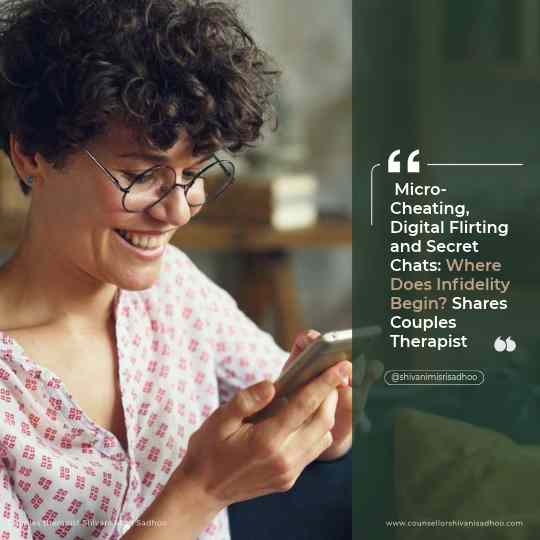
Infidelity is no longer limited to physical relationships or romantic encounters outside a committed partnership. In today’s digital world, emotional connections, private conversations, online flirting and seemingly harmless interactions can also create tension between partners.
A person may never meet someone they are messaging, yet their partner may still feel betrayed by the nature of those conversations. This raises an important question: does cheating begin with physical intimacy, or can it start much earlier through seemingly small online interactions?

Understanding micro-cheating, digital flirting and secret chats requires looking beyond individual actions and examining trust, emotional boundaries and the expectations two people have established in their relationship, shares Shivani Misri Sadhoo who is an eminent couples counselor in Delhi.
What Is Micro-Cheating in a Relationship?
Micro-cheating refers to small behaviors that may suggest romantic or emotional interest in someone outside a committed relationship. These actions may appear insignificant individually, but together they can create secrecy, emotional distance and insecurity.
Examples may include:
- Regularly checking an ex-partner’s social media profile.
- Maintaining flirtatious conversations while hiding them from a partner.
- Giving someone romantic attention through private messages.
- Keeping dating apps active despite being in an exclusive relationship.
- Deleting conversations to prevent a partner from discovering them.
Not every interaction with another person is micro-cheating. Having friendships, socializing and communicating with colleagues are normal parts of life. The concern arises when interactions become deliberately secretive, emotionally intimate or inconsistent with the boundaries agreed upon by both partners.
When Does Digital Flirting Cross the Line?
Digital flirting can be difficult to define because people have different expectations about online behavior. For one person, exchanging playful messages may seem harmless. For another, suggestive comments, romantic emojis or repeated compliments may feel like a breach of trust.
The difference often lies in intention, context and transparency.
Consider someone who regularly messages another person late at night, shares personal relationship problems and seeks emotional attention while keeping these conversations hidden from their partner. Even without physical intimacy, this behavior may begin to affect the emotional connection within the primary relationship.
Digital flirting becomes particularly concerning when someone knowingly continues an interaction despite understanding that it would hurt their partner or violate an agreed boundary.

Are Secret Chats a Sign of Emotional Infidelity?
Privacy and secrecy are not the same thing. Everyone deserves personal space, including people in committed relationships. Partners do not necessarily need access to each other’s phones, passwords or every private conversation.
However, secrecy becomes a concern when someone actively conceals an emotional or romantic connection because they know it conflicts with the relationship’s expectations.
Secret chats may involve:
- Hiding notifications from a particular person.
- Using disappearing messages to conceal conversations.
- Giving misleading explanations about who they are talking to.
- Sharing emotional experiences with someone else while withdrawing from their partner.
- Becoming defensive whenever the subject of a particular friendship arises.
These behaviors do not automatically prove infidelity. However, repeated concealment and dishonesty can damage trust, even when there has been no physical involvement.
Why Do People Engage in Micro-Cheating?
There is no single reason why people engage in these behaviors. Some may seek validation, excitement or attention. Others may enjoy the feeling of being desired without intending to leave their existing relationship.
In some cases, dissatisfaction, loneliness or unresolved relationship conflicts may contribute to seeking emotional connection elsewhere. Social media also makes it easier to maintain private interactions and reconnect with people from the past.
However, relationship dissatisfaction does not justify dishonesty. If someone feels emotionally disconnected or unfulfilled, addressing those concerns directly is healthier than developing secret connections outside the relationship.
How Can Couples Establish Healthy Digital Boundaries?
Couples may have different views about friendships, online communication and interactions with former partners. Assuming that both people automatically share the same expectations can lead to misunderstandings.
A healthier approach involves discussing boundaries openly.
Partners can begin by:
- Discussing expectations: Talk about what each person considers acceptable online behavior, including flirting and communication with former partners.
- Being honest: Avoid hiding conversations or creating misleading explanations about online interactions.
- Respecting individual privacy: Establish boundaries without demanding unrestricted access to personal devices or accounts.
- Addressing discomfort: Discuss situations that create insecurity instead of responding through accusations or monitoring.
- Rebuilding trust: If boundaries have been crossed, acknowledge the behavior and work towards restoring emotional safety.
The purpose of these conversations should be mutual understanding rather than controlling each other’s social interactions.
A Relationship Therapist’s Perspective
“Infidelity does not always begin with physical intimacy. Sometimes, it starts when emotional attention, romantic interest or private communication is deliberately directed outside the relationship and concealed from a partner. What matters is understanding the boundaries both individuals have agreed upon and recognising when secrecy begins to replace honesty.” Says Shivani Misri Sadhoo an experienced infidelity counselor in Delhi.
Where Does Infidelity Really Begin?
There is no universal definition of micro-cheating that applies to every couple. What one relationship considers harmless may be unacceptable in another. However, repeated dishonesty, concealed romantic interest and emotional investment outside the partnership can undermine the trust that holds a relationship together.
Ultimately, the question is not simply whether a message or online interaction qualifies as cheating. It is whether the behavior respects the relationship’s agreed boundaries, emotional commitment and mutual expectations.
Frequently Asked Questions About Micro-Cheating and Digital Boundaries
1. Is micro-cheating or digital flirting actually considered infidelity?
There is no universal definition that applies to every couple, as partners hold different expectations around online behavior. However, according to couples counselor Shivani Misri Sadhoo, infidelity does not always begin with physical intimacy—it can start when romantic interest, emotional attention, or private communication is directed outside the relationship and deliberately concealed from a partner, eroding the trust that holds the relationship together.
2. What is the difference between healthy privacy and secrecy in a relationship?
Everyone in a committed relationship is entitled to personal space, friendships, and everyday privacy without having to hand over passwords or grant unrestricted phone access. Secrecy becomes a concern when a partner actively hides an emotional or romantic connection because they know it crosses relationship boundaries—such as hiding notifications, deleting conversations, using disappearing messages, giving misleading explanations, or becoming defensive when asked about a particular person.
3. How can couples establish healthy digital boundaries without being controlling?
Rather than monitoring devices or making accusations, couples can protect emotional intimacy through open, mutual conversations. Healthy steps include explicitly discussing expectations around online flirting and contact with ex-partners, being transparent instead of concealing chats, addressing feelings of discomfort or insecurity calmly, and rebuilding emotional safety through honesty if a boundary has been crossed.

Shivani Misri Sadhoo is an internationally recommended relationship counsellor by the world’s biggest and most trusted study and research-based foundation for couples therapy – Gottman Institute. She is trained in specialised key relationship counselling Skills from AIIMS, VIMHANS and various other reputed institutions. Counsellor Shivani Misri Sadhoo is also certified in emotionally focused therapy, cognitive behavioural therapy, and dialectical behaviour therapy.
Counselor Shivani Misri Sadhoo is also a Certified Neuro Linguistic Practitioner with specialized training and experience in the field of affairs/betrayals, trust issues, difficulty communicating, conflicting values, bereavement, grief and loss (affairs, separation, divorce, childhood) and emotional health issue (anxiety, social anxiety, fear, depression, low mood).
Currently, Shivani Misri Sadhoo is one of the top counselors with the HIGHEST Success Rate with over 17,000 happy couples and individuals (based in India and abroad), who has benefited from her therapy. Psychologist and Counselor Shivani Misri Sadhoo not only practices independently from her clinic in Greater Kailash, Delhi, India, but also is listed on the panel of eminent hospitals like IBS Hospital Panel – Institute of Brain and Spine, Express Clinic, Fortis (formerly) based in Delhi.
Call Counselor: +91-8860875040
Email: saarthiforlife@gmail.com