
Summary
- FAFO (Fuck Around and Find Out) parenting encourages children to learn through the natural consequences of their actions, helping build confidence, accountability, resilience, and independent decision-making.
- The approach can reduce parental stress and foster self-reliance, as children gradually learn to take responsibility for their choices and understand that actions have consequences.
- However, FAFO parenting requires careful balance, as excessive freedom without guidance may leave children feeling unsupported, expose them to unnecessary risks, and may not be suitable for younger children who cannot yet fully understand cause and effect.
We often grow up seeing our parents as our strongest pillars. We idolise them, emulate their ways, believe in their ideologies, and follow in their footsteps. Every parent has a unique way of nurturing and guiding their children.
While some teach through discipline, others teach through affection. Some offer advice at every turn, while others quietly allow their children to navigate life on their own.
However, parenting is not about perfection. It is simply about doing one’s best with love, patience, sacrifice, and an unwavering desire to see their children succeed in life and be happy.
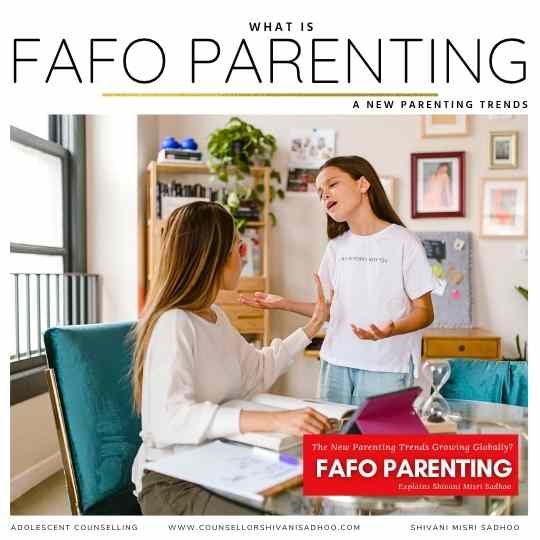
While parenting styles might have evolved over the decades, the essence remains unaltered: the wish to see their children happy and successful in life. If you thought you heard them all, well, you are wrong.
For there is another term that has found its way to the parenting style dictionary: FAFO. It stands for Fuck Around and Find Out.
Let’s find out more about FAFO Parenting and the reason of its global popularity from eminent marriage and family counsellor in Delhi, India Shivani Misri Sadhoo in this article.
What Exactly is FAFO Parenting?
This refers to a style in which parents allow children to experience the natural consequences of their choices, even when those consequences may be painful or uncomfortable.
Parents feel that children will learn life ‘s most valuable lessons not through repeated warnings, sermons, or, punishments, but through firsthand experience.
For instance, let the child miss their dinner if they throw tantrums that they want to have that pizza they were craving since evening even though a perfectly healthy home-cooked meal is waiting at the dinner table; let them refuse to tidy their room and then struggle later to find their favourite toy or school notebook the next morning.
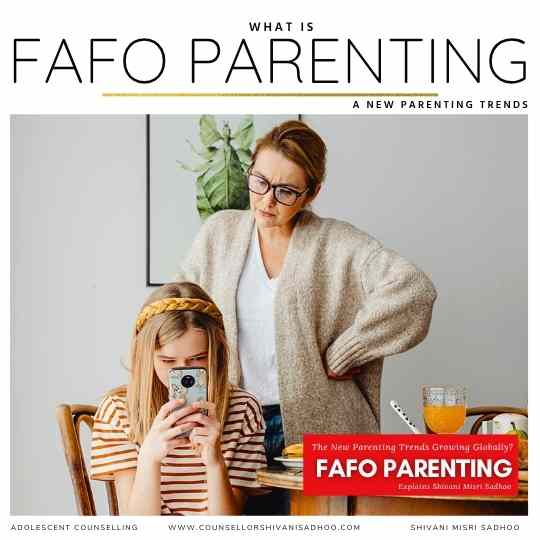
The sole idea is not to humiliate or abandon the child, but to create opportunities for meaningful learning early on for a better tomorrow.
At its core, FAFO parenting aims to nurture accountability, problem solving abilities, resilience and sound decision making.
Couples and family therapist Shivani Misri Sadhoo says that “Children grow not only from the advice they receive, but also from the consequences they experience. The key is to balance freedom with guidance, allowing them to learn while knowing they are supported along the way.”
What are its Advantages/Merits?
Some of the merits are as:
1. Instils confidence
One of the best things about this style is that it allows children the freedom to make their own choices. That sense of autonomy encourages them to trust their own judgment. They know that if they make a wrong choice, it is a consequence of their thought process.
So, they don’t blame their parents for it. A child who forgets, fails, or makes a poor decision today is often better equipped to make a wiser one tomorrow.
This gradual freedom builds confidence, independence, and resilience, helping children grow into adults who can face life’s challenges without constantly relying on others to rescue them.
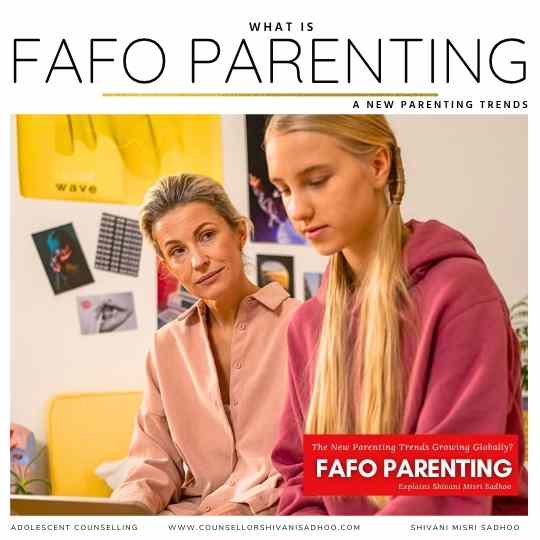
2. Builds Resilience
How do you think children learn to handle life’s little challenges when we are not around to guide them? One of the biggest benefits of FAFO parenting is that it helps children build real-world resilience.
When a child forgets to complete a school assignment and faces the consequence, or misses the school bus because they woke up late, they begin to understand that every choice has an outcome.
You make a wrong choice, you suffer. With time, they learn to plan ahead, manage their responsibilities.
These everyday real-life experiences teach them resilience. Such small setbacks, though frustrating in the moment, help build resilience, self-discipline, and the confidence to handle challenges independently.
3. Reduces Parenting Fatigue
Nowadays, we are living in an era where time id of the essence. Everyone is busy juggling multiple responsibilities, meeting deadlines, and trying to strike a balance between work and family life.
One of the reasons FAFO parenting is being embraced globally today is because it helps reduce parental fatigue.
The constant stress that comes with daily parenting which includes repeated nagging, endless negotiations, frequent arguments, and having to forcibly enforce every rule can be emotionally draining.
Thanks to FAFO, parents can now spend less time battling over every issue and more time on building a healthier relationship with their children.
What are its Disadvantages/Demerits?
A few of the demerits are:
1. Freedom Needs Boundaries
Talking about disadvantages, the first thing that comes to mind is that liberty should always be licensed.
While it is important to give children the freedom to make their own choices, parents must also recognise that not every lesson can be learned safely through experience.
Certain choices can have a serious long-lasting impact on them. For example, allowing a child to experiment with prohibited drugs in the name of learning consequences can expose them to addiction, health risks, and irreversible damage.
In such cases, parental guidance, supervision, and firm boundaries are not restrictions but essential safeguards that protect a child’s well-being.
2. Lacks Emotional Support
Every child is unique, and what may serve as a valuable lesson for one child can feel like rejection or indifference to another.
The danger with FAFO parenting is that it can sometimes shift the balance from being excessively involved to becoming emotionally unavailable.
When parents consistently step back and let consequences do all the teaching, children may feel unsupported during moments when they genuinely need guidance, reassurance, or empathy.
Not every mistake requires a hard lesson; sometimes, a child learns best when a parent stands beside them, helping them understand where they went wrong and how to do better next time.
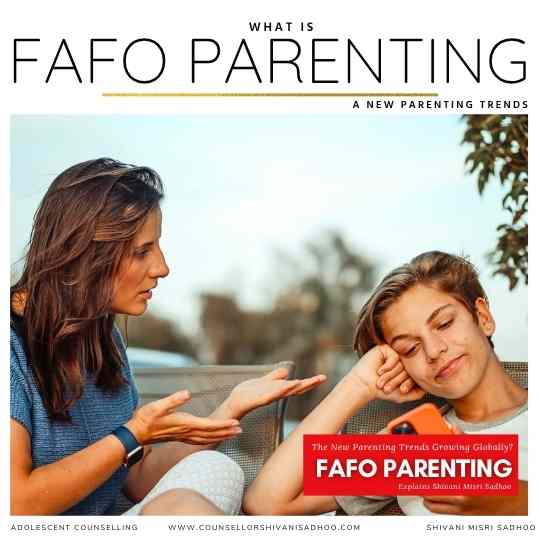
3. Not For Every Age Group
While FAFO parenting may work well with older children who can clearly understand the link between their choices and the consequences that follow, it is not always suitable for younger children.
At a very young age, children are still developing their ability to reason and connect cause with effect.
As a result, they may experience a negative outcome without fully understanding why it happened, leaving them confused, frightened, or frustrated rather than wiser.
Every child matures at a different pace, which is why a parenting approach that works for one child may not necessarily work for another.
So, finally, FAFO parenting reminds us that children learn valuable lessons of life through experience. They also need guidance, support, and sensible boundaries along the way.
Allowing children to face the consequences of their actions can build confidence, resilience, and independence, but it should never replace parental involvement altogether.
Like most parenting approaches, FAFO works best when applied with balance, empathy and good judgment.
After all, the goal is not merely to teach lessons, but to raise responsible, emotionally secure, and capable individuals.

Shivani Misri Sadhoo is an internationally recommended relationship counsellor by the world’s biggest and most trusted study and research-based foundation for couples therapy – Gottman Institute. She is trained in specialised key relationship counselling Skills from AIIMS, VIMHANS and various other reputed institutions. Counsellor Shivani Misri Sadhoo is also certified in emotionally focused therapy, cognitive behavioural therapy, and dialectical behaviour therapy.
Counselor Shivani Misri Sadhoo is also a Certified Neuro Linguistic Practitioner with specialized training and experience in the field of affairs/betrayals, trust issues, difficulty communicating, conflicting values, bereavement, grief and loss (affairs, separation, divorce, childhood) and emotional health issue (anxiety, social anxiety, fear, depression, low mood).
Currently, Shivani Misri Sadhoo is one of the top counselors with the HIGHEST Success Rate with over 17,000 happy couples and individuals (based in India and abroad), who has benefited from her therapy. Psychologist and Counselor Shivani Misri Sadhoo not only practices independently from her clinic in Greater Kailash, Delhi, India, but also is listed on the panel of eminent hospitals like IBS Hospital Panel – Institute of Brain and Spine, Express Clinic, Fortis (formerly) based in Delhi.
Call Counselor: +91-8860875040
Email: saarthiforlife@gmail.com